
How to Get Parts in RIG Riot
Outer shells from enemy RIGs, inner systems from other foes, and garage assembly.
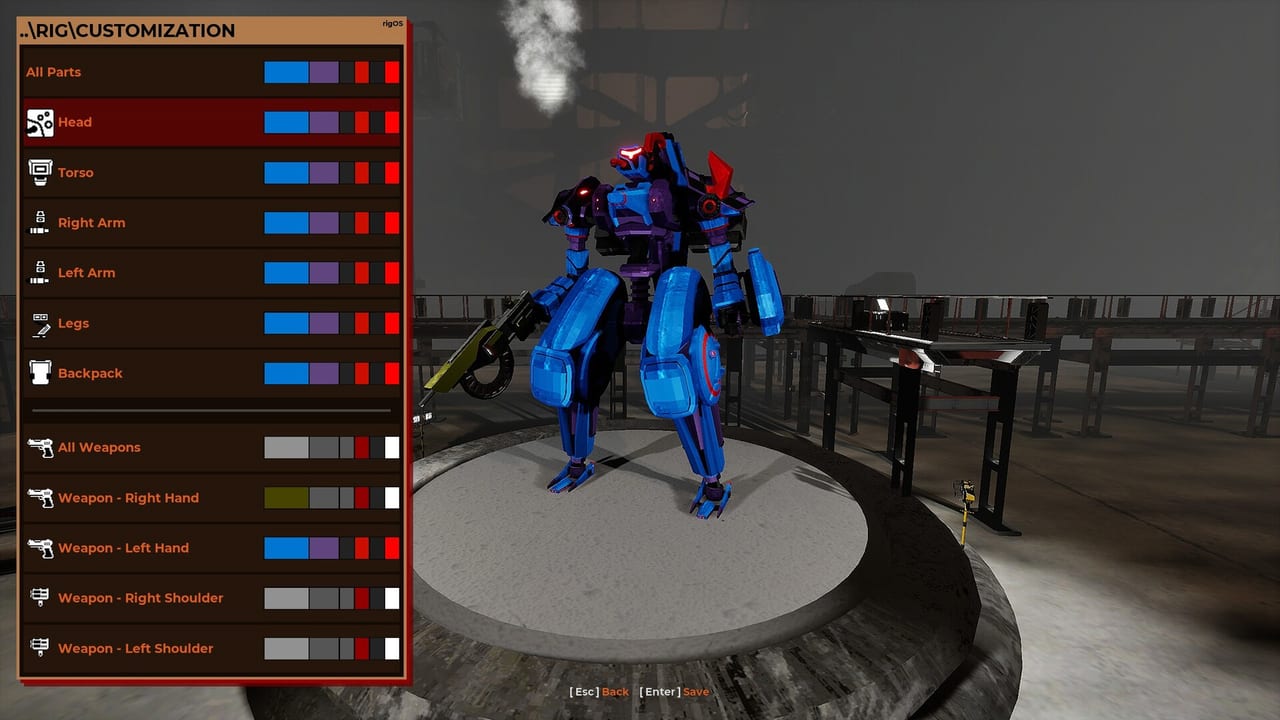
This page is for pilots who finish raids and still cannot explain why they have three backpacks and no generator. RIG Riot’s long-term power is parts: outer shells from enemy RIGs, inner systems from everyone else, assembled in the garage from set components. If you only wanted to know where to click after a drop, skip to garage customization. If you wanted a farm plan, stay here.
Parts are not weapons. Weapons and Volatile Mods come from encryption-token chests and level-up offers. Parts drop from defeated enemies and persist. Scrap is the Armory currency; recycling turns spare parts into more Scrap. Those sinks fight each other. The getting started guide still applies: do not recycle your first Assassin arm to buy a starter you will not use.
What drops from whom
Outer parts — head, torso, arms, legs, backpack — drop from defeated enemy RIGs, including RIG bosses. Inner parts — boosters, target acquisition systems, generators — drop from non-RIG enemies and non-RIG bosses. If your garage is all armor and no boost, you are killing the wrong roster.
Transport bosses follow the same split. Shot Caller is a lightweight dual-gun RIG, so it is an outer-part fight. A non-RIG threat is an inner-part fight. Do not activate the transport only for loot if your guns cannot win. Raid timing lives in the raids and objectives guide.
Introductory raid outer drops were tuned to starter sets and no longer guarantee an Expendable shell. The tutorial is a teaching raid, not a rare-farm. After that, hunt camps, checkpoints, fortifications, and Arena Foe duels for the enemy types you need. Bandits, Guards, militia, and Corpo troops are not the same table.
Leg parts can roll Quad Legs (ground-focused) or Biped legs. You do not buy that at a vendor. Do not scrap the “wrong” legs on sight; they are a second movement kit. Loot pickup radius was increased so shells bounce less. If a part hits the floor in a fight, boost back.
Watch this next: why parts make runs replayable
Sage’s replayability devlog is about the garage as a long game: mixed set components, thousands of parts, a reason to raid after a loss. Watch it for the design, then use the assembly rules below so you stop treating every drop like a finished mech.
How parts are assembled, and what not to scrap
Every part is made from set components. Example: an arm equals shoulder shell (recoil plus melee) plus upper arm (recoil) plus forearm (melee). Scout, Scrapper, Bulwark, Assassin, and Watcher pack are the named sets. Mixing them is the point. A Watcher pack with doubled horizontal speed on a Bulwark torso is a real plan if you can pay the weight bill.
Rare part mods are percentage based. Fortified gives equal Weight and Weight Load, not flat capacity — it is not a four-heavy ticket. Chase Assassin to carry, Watcher to move, Scrapper when you want backpack repair pickups with a world icon. Inner parts were reworked in July 2026; farm generators as seriously as heads.
Recycling upgraded parts can refund 50% Scrap. Scrapping rewards Scrap (unused SCM was converted). Recycle duplicates after you have a mix you like. Settlement rerolls are a better sink than deleting your only Quad Legs. Filter what to wear with the builds tier list after you own the pieces, then save the loadout in garage customization.
Farm routes that respect the raid
Mission mode is the farm classroom: no endless patrols, difficulty from objectives completed, time to peel a RIG. Assault is volume: more bodies, more inner-part chances, worse extraction if you get greedy. Arena Foe is a duel — good for a targeted RIG kill, bad for vacuuming a stage.
Finish majors, spend tokens only if you can carry the gun, then take the transport when the board is ready. Boss parts are a bonus, not the whole plan. The updates hub tracks demo patches and launch notes for Steam’s September 14, 2026 window. The tools hub covers controls, specs, and Deck quirks that make farming sessions less miserable. The demo can be downloaded on itch.io as well as Steam.
Next steps after you bank a full set
Once you can name where outer versus inner parts come from, stop scrapping unknowns for a day. Assemble one Scout-leaning mix and one Assassin-leaning mix in garage customization, then take both through the same Mission majors from the raids and objectives guide. Compare them against the builds tier list only after you have felt the weight. If the farm is limited by binds or hitching, detour through the tools hub before you blame the loot tables.
Frequently Asked Questions
Quick answers to the most common RIG Riot questions.
Do chests drop outer and inner parts?
No. Chests spend encryption tokens on weapons and Volatile Mods. Parts drop from enemies. Equip what you keep in garage customization.
Enemy RIG versus non-RIG — which farm do I want?
RIGs drop outer parts (head, torso, arms, legs, backpack). Non-RIGs drop inner parts (boosters, target acquisition, generators). Bosses follow the same split. Objective types are listed in the raids and objectives guide.
Should I scrap extra parts for Armory Scrap?
Only duplicates, and only after you have a mix you like. Recycling can refund some Scrap, but a missing forearm is rarer than Armory points. Starter spending is covered in getting started.
How do I get Quad Legs or Biped legs?
They roll when you receive a new leg part. Quad Legs are ground-focused; Bipeds also drop. Equip and test both before you trust a builds tier list recommendation.
Where do I track demo patches that change drops?
Use the updates hub for launch timing, demo notes, and patch history. Introductory raid outer drops were changed to starter sets and no longer guarantee an Expendable shell.